

Predictable Sales Pipelines: How You Can Stop Losing Leads
June 7, 2026
How High-Performing Support Teams Reduce First Response Time
June 17, 2026Predictable Sales Pipelines: How You Can Stop Losing Leads
June 7, 2026How High-Performing Support Teams Reduce First Response Time
June 17, 2026Customer Success Management: The Growth Strategy Most Emerging Businesses Are Ignoring
Many business owners believe growth comes from acquiring more customers.
It sounds logical.
More customers should mean more sales. More sales should mean more revenue. More revenue should mean more growth.
Yet countless businesses across Nigeria spend enormous amounts of time and money chasing new customers while quietly neglecting the ones they already have.
The irony is that some of the most profitable businesses are not necessarily the ones winning the most new customers. They are the ones keeping existing customers happy, engaged, and loyal.
This is where Customer Success Management comes in.
While the term has become popular among technology companies and global enterprises, its principles are equally relevant to freelancers, agencies, startups, retailers, professional service firms, educational institutions, healthcare providers, and growing SMEs across Nigeria.
In fact, for many emerging businesses, customer success may be the difference between surviving and scaling.
What Exactly Is Customer Success?
Many people confuse customer success with customer service.
They are not the same.
Customer service is reactive.
A customer encounters a problem and reaches out for assistance.
Customer success is proactive.
It involves helping customers achieve their goals before problems arise.
Think about it this way.
A customer buys your product or service because they expect a result.
The result could be increased sales, improved productivity, reduced costs, better health, greater convenience, enhanced security, or a host of other outcomes.
Customer success focuses on ensuring customers actually achieve those outcomes.
The question shifts from:
“How do we support customers when something goes wrong?”
to
“How do we ensure customers continuously gain value from what we provide?”
That subtle difference changes everything.
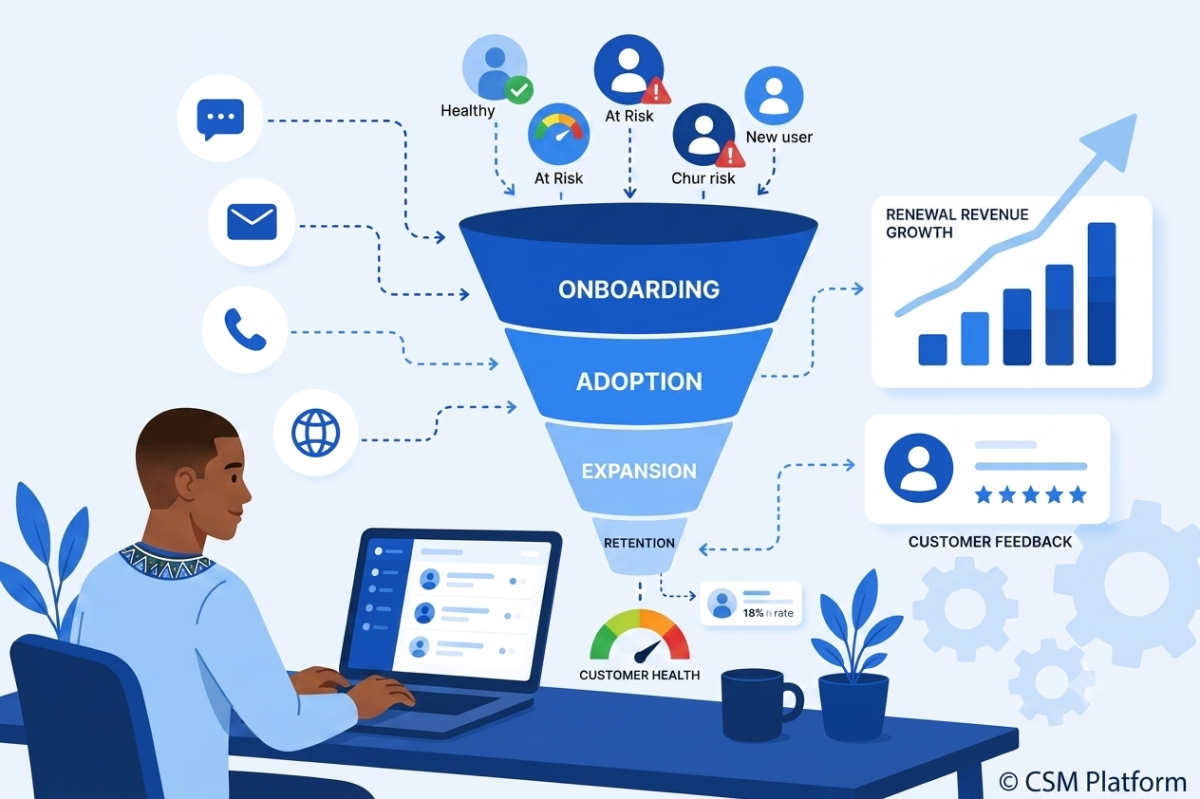
Why Customer Success Matters More Than Ever
Business competition has intensified.
Customers today have more options than ever before.
A bakery in Lagos can discover new suppliers online.
A startup can switch software providers within minutes.
A retailer can compare dozens of vendors before making a purchase.
In such an environment, customer acquisition is becoming increasingly expensive.
Digital advertising costs continue to rise.
Social media algorithms continue to evolve.
Attention spans continue to shrink.
The businesses that thrive are often those that maximise the value of existing customer relationships.
Retaining a customer is usually less expensive than acquiring a new one.
More importantly, satisfied customers often become ambassadors for your business.
They refer friends.
They write reviews.
They make repeat purchases.
They become part of your growth engine.
The Nigerian Business Reality
Customer success is especially important within the Nigerian business environment.
Trust remains one of the most valuable currencies in commerce.
Many purchasing decisions are heavily influenced by recommendations, referrals, and reputation.
People want to buy from businesses they trust.
And trust is built through consistent positive experiences.
Consider two service providers offering similar solutions.
One delivers the service and disappears.
The other checks in regularly, offers guidance, responds promptly, provides updates, and demonstrates genuine concern for the customer’s success.
Which business is more likely to receive referrals?
Which business is more likely to secure repeat business?
Which business is more likely to survive economic uncertainty?
The answer is obvious.
Customers rarely remember every detail of a transaction.
But they always remember how a business made them feel.
Customer Success Begins After the Sale
Many businesses celebrate when a sale is closed.
The contract is signed.
The invoice is paid.
The money enters the account.
The team moves on to the next prospect.
Unfortunately, this is where many opportunities are lost.
The customer journey does not end after payment.
In reality, it is only beginning.
A customer who has just purchased from you is evaluating whether they made the right decision.
They are looking for reassurance.
They want evidence that they chose wisely.
Businesses that recognise this crucial period create stronger customer relationships.
Simple actions can make a significant difference.
A welcome message.
An onboarding session.
A follow-up call.
A progress update.
A customer satisfaction survey.
A helpful guide.
None of these activities are particularly expensive.
Yet they demonstrate commitment to customer outcomes.
The Hidden Revenue in Existing Customers
Many business owners underestimate the financial value of existing customers.
Imagine a digital marketing agency with twenty clients.
If each client generates ₦500,000 annually, the client portfolio is worth ₦10 million per year.
Now imagine poor communication causes four clients to leave.
The agency has effectively lost ₦2 million in annual revenue.
To replace those clients, the agency must invest time, marketing effort, and money acquiring new business.
What if those four customers could have been retained through better engagement?
What if regular check-ins had identified concerns before they became frustrations?
What if customer feedback had been acted upon earlier?
Customer success is not merely about customer satisfaction.
It is about protecting revenue.
Listening Is a Competitive Advantage
One of the simplest customer success strategies is also one of the most neglected.
Listening.
Many businesses spend significant resources telling customers about their products.
Very few invest enough effort in understanding customer experiences.
The most successful organisations ask questions.
What challenges are customers facing?
What are they trying to achieve?
What obstacles are slowing them down?
How can the business provide greater value?
These conversations often reveal opportunities for improvement, innovation, and growth.
Customers frequently tell businesses exactly what they need.
The challenge is whether businesses are paying attention.
Scaling Customer Success Through Systems
As businesses grow, customer relationships become harder to manage manually.
A founder who once knew every customer personally may eventually oversee hundreds or thousands of customers.
Important conversations become difficult to track.
Follow-ups get missed.
Customer requests fall through the cracks.
This is where systems become essential.
Customer Relationship Management (CRM) platforms help businesses centralise customer information, track interactions, schedule follow-ups, monitor service requests, and identify opportunities for deeper engagement.
Instead of relying on memory, businesses rely on structured processes.
This consistency becomes increasingly valuable as customer volumes grow.
The Future Belongs to Customer-Centric Businesses
Products can be copied.
Services can be replicated.
Prices can be matched.
Customer relationships are much harder to duplicate.
Businesses that consistently help customers achieve meaningful results create loyalty that competitors struggle to disrupt.
Whether you are a freelancer, startup founder, consultant, retailer, healthcare provider, educational institution, or growing SME, customer success deserves a place at the centre of your business strategy.
Not because it sounds modern.
Not because it is fashionable.
But because customers who succeed with your business are far more likely to stay, spend, and advocate for your brand.
The businesses that thrive are often those that maximise the value of existing customer relationships.
Key Takeaway
Many emerging businesses focus almost exclusively on winning new customers.
Few devote equal energy to ensuring existing customers succeed.
Yet sustainable growth is rarely built on acquisition alone.
It is built on retention, loyalty, trust, and long-term relationships.
Customer success management provides the framework for achieving all four.
In an increasingly competitive marketplace, businesses that help their customers win will ultimately be the businesses that win themselves.
And that may be the most powerful growth strategy available to Nigerian businesses today.
Ready to take control of your customer success management? Discover how TASKLY CRM keeps your customers organised and engaging.